A small game to learn from
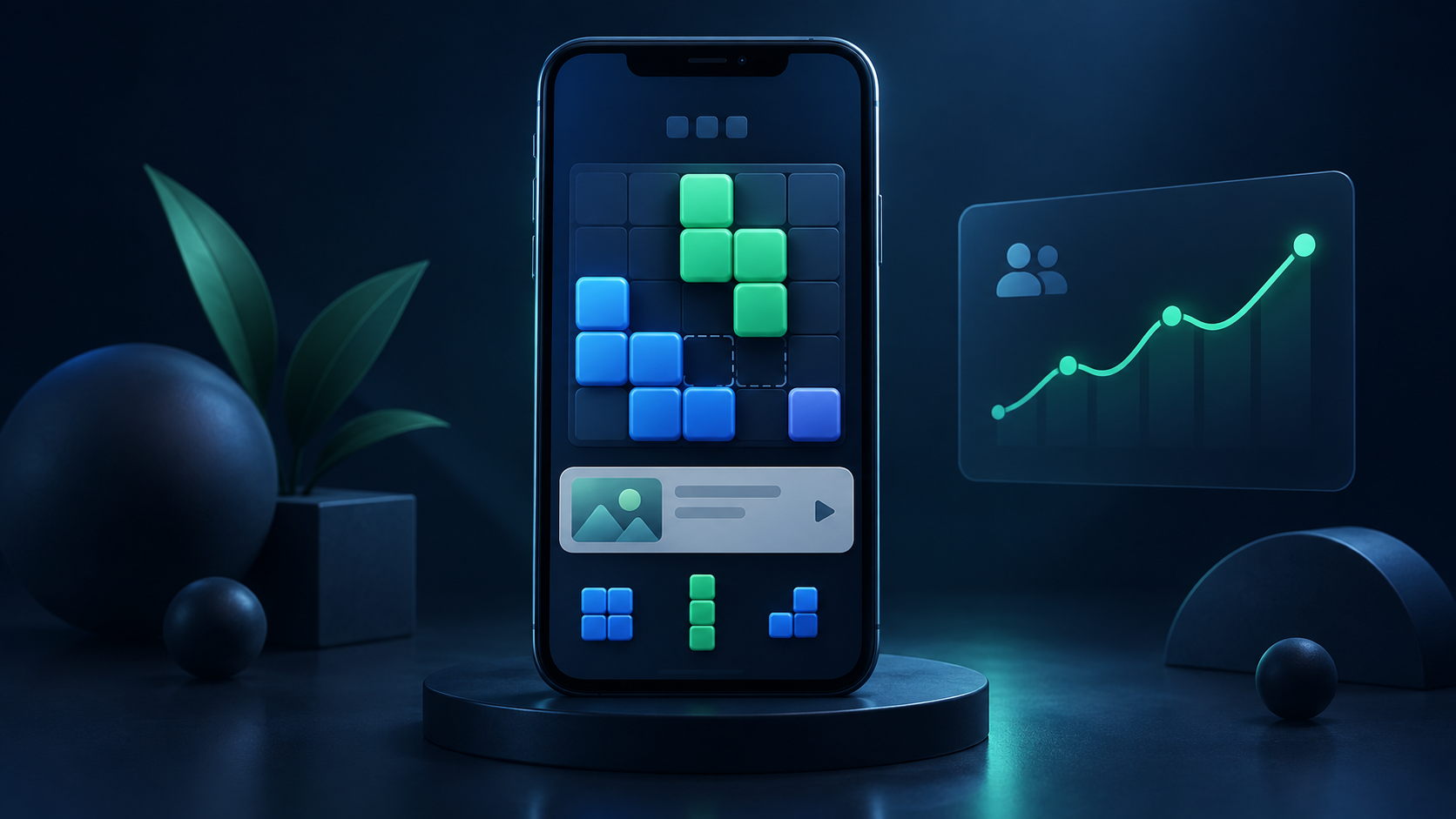
We built a simple mobile game to try out ad funding with Google AdMob. Adding ads is only part of the exercise. We also want to understand how they affect play, so we can bring that knowledge to future client projects.
The game is easy to pick up and intended for short breaks, such as time spent waiting. That simplicity raises questions a feature list cannot answer: Who actually plays? Do people come back? At what point does an ad interrupt them enough to make them close the app?
A focused first version gives us room to examine those questions. We explain how we define the core of an app in From App Idea to a Focused MVP.
Ads are one possible way to fund an app
Every app needs a way to support its continued development. Early on, there may be no proven business model. Advertising can be one way to earn some revenue. Another possible approach is to offer an ad-free paid version alongside the version with ads.
Neither option fits every product. A game played for a few minutes asks something different of its users than an app opened to complete a specific task. Our aim is to learn from our own example before making recommendations about when ads might help and when they get in the way.
B2B
Could ads fit your app without interrupting what people came to do?
We look at the business model alongside the user journey and identify what needs to be understood before you decide.
Step 1 of 2
Step 2 of 2
Non-binding contact enquiry
By submitting, you are sending a non-binding contact enquiry to develate. We use your details to respond to your enquiry personally.
When an ad appears matters
In a short game, even one interruption can stand out. We want to look closely at where ads appear and what happens afterwards. Do players end their session? Do they return later? Those observations tell us more about the experience than the number of ads shown on its own.
We plan to analyse usage anonymously and adjust the experience in response. If a placement disrupts play, we can change it and look again. The aim is better
retention
User retention
Whether people return to an app and continue using it after their first visit.
. Whether that also improves revenue is something actual usage data will have to show.
Finding the people who want to play
The rules are simple enough for different age groups to understand, but that does not tell us who the players will be. Both the game's design and its store listing need a clearer picture. Will people search for this kind of game, or come across it while browsing? Which description makes sense to someone looking for a quiet way to spend a few minutes?
With a productivity app, the task someone wants to complete is often easier to describe. For a small game, we first need to learn which terms and expectations fit. Discoverability is part of the experiment too: being in an app store does not, by itself, mean people will find and play a game.
We intend to share what we learn as the project develops. Once we can see how people discover the game, use it, and respond to ads, we will be in a better position to advise others on the same choices.