A good app does not begin with a long feature list
An app idea can grow quickly. A single function turns into user accounts, notifications, analytics, payments, integrations, and a dedicated backend. Each of those elements may be valuable. When they all become part of the first release, however, a clear idea can turn into a project that is difficult to estimate and deliver.
Our approach starts with a different question: Which single flow has to work for the app to provide real value?
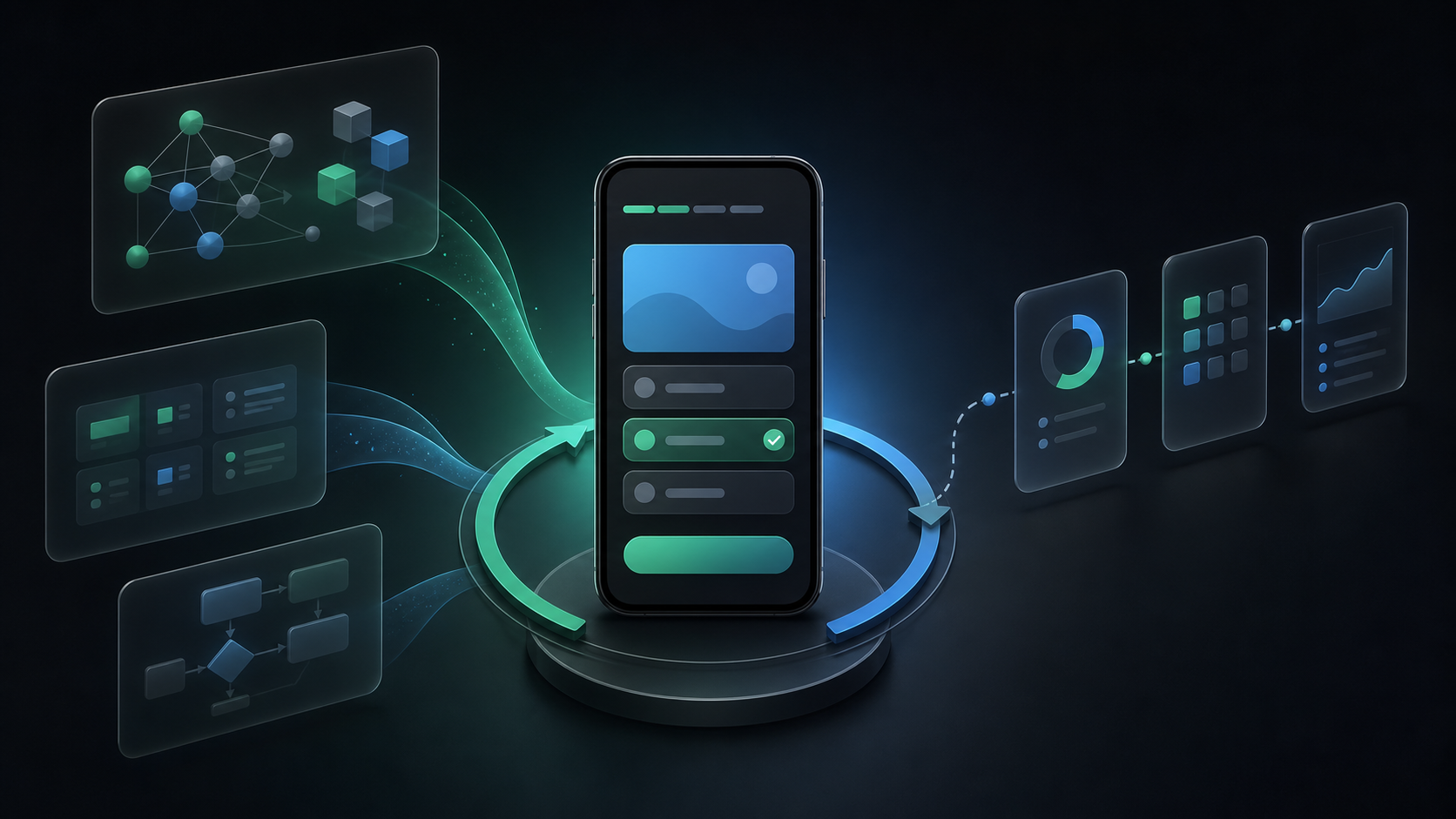
One of our internal learning-app projects illustrates the point. The application helps dog owners prepare for a knowledge assessment. Its core is intentionally focused: answer a question, see whether the answer was correct, understand the explanation, and repeat. This learning loop supports the entire first version.
Make the core process visible
Before development begins, we clarify the goal together. Who will use the app? Which problem should it solve in everyday life? Which content or domain knowledge already exists? And how will we know that the first version serves its purpose?
The result is not the longest possible requirements catalogue. It is a clearly bounded core process. For the learning app, that meant an existing question set, possible answers, evaluation, and an understandable explanation. Everything else could wait.
This reduction does not abandon the larger vision. It makes that vision testable. A small, usable release creates feedback sooner and shows which extensions actually matter.
B2B
Which core process in your business is valuable enough for an app—and focused enough to test in a first version?
We help you sharpen that core, make scope and risks visible, and turn it into a deliverable first release.
Step 1 of 2
Step 2 of 2
Non-binding contact enquiry
By submitting, you are sending a non-binding contact enquiry to develate. We use your details to respond to your enquiry personally.
Local or server-based is a product decision
Not every app immediately needs user accounts, cloud storage, or a dedicated API. The learning app works entirely on the device. That reduces technical dependencies, avoids unnecessary data collection, and keeps the initial scope focused.
For other products, a backend is essential—for example, when teams collaborate, data must sync across devices, or the app connects to central business processes. The point is not to favour local or server-based development by default. The point is to derive the decision from the actual use case.
Privacy, operating costs, maintenance, and approval requirements then become part of the product decision from the beginning instead of late-stage surprises.
From an idea to a deliverable release
A focused app project can be organised into a few understandable steps:
- Discovery: We clarify goals, audience, existing foundations, and essential functions.
- Concept: We condense the findings and propose one or two sensible shapes for the first version.
- Scope: We agree on the functionality, technical foundation, and success criteria.
- Implementation: We build the app and regularly check it against the agreed core process.
- Release: Store requirements, privacy disclosures, builds, and approval are handled as part of the project.
A clearly defined goal prevents too many stakeholders from pulling development in different directions. Questions and feedback still matter, but they stay connected to a shared frame.
Starting small does not mean staying small
An
MVP
Minimum Viable Product
A deliberately lean but usable first product version that lets a team test its core value early and with manageable effort.
is a foundation, not a final state. Once the core process works, the application can grow deliberately: through custom branding, integrations with existing systems, synchronisation, in-app purchases, subscriptions, or additional services.
The visual identity can grow with the product as well. The flow first needs to be understandable and useful. The interface can then be aligned with the brand, marketing, and user expectations without hiding an unproven product underneath polished visuals.
The result is not a prefabricated template app. It is a tailored product with a dependable first stage. The larger idea remains intact—it is simply arranged into an order that makes decisions, budget, and implementation easier to manage.